


What’s the first thing that comes to your mind when you hear the name Nikola Motor Company? Probably sleek, futuristic trucks gliding effortlessly down highways, powered by the whisper of hydrogen fuel cells, right? Well, you are not wrong; Nikola Motor Company managed to build a reputation for being just the right carmaker for those kinds of innovative vehicles!
Thanks to the bold vision of Nikola founder Trevor Milton, Nikola Motor Company seeks to revolutionize the transportation industry by offering zero-emissions solutions for heavy-duty vehicles. Nikola Motor Company specializes in heavy-duty commercial electric vehicles and energy solutions.
The company has an impressive lineup of concept vehicles, including the Nikola One, Two, Tre, NZT (Zero), Reckless, WAV, and Badger. These vehicles showcase their commitment to clean energy and sustainable transportation. Coming up next, we take a closer look at the story of Nikola Motor Company.
History of Nikola Motor Company
Nikola’s story began in 2014 with a singular vision: to create environmentally friendly alternatives to traditional diesel trucks. Drawing inspiration from Nikola Tesla, the company set out to develop fuel cell and electric drivetrains that could compete with existing diesel counterparts in terms of performance and range.
The Foundation!
-102622189.jpg "A hydrogen fuel truck parked in a lush green field.")
The year was 2014, and fossil fuels reigned supreme. At these times, it seemed like the trucking industry plans to remain a significant contributor to greenhouse gas emissions. Yet, amidst this seemingly unyielding reality, a spark of innovation ignited in the mind of Trevor Milton. This spark later became Nikola Motor Company, a revolutionary venture aiming to redefine long-haul trucking with hydrogen-powered vehicles.
Milton, a visionary entrepreneur with a passion for sustainable solutions, envisioned a future where trucks wouldn’t spew plumes of black smoke but instead worked on clean hydrogen fuel. He saw the potential for a drastic shift in the industry, and with unwavering dedication, he set out to make it a reality.
The company’s initial days were marked by an electric blend of ambition and ingenuity. A small, passionate team of engineers and designers huddled in a modest office, fueled by the shared belief that they could truly change the world. They poured over intricate designs, meticulously analysed fuel cell technology, and dreamt of a day when zero-emission trucks would be a commonplace sight on the roads.
Making Some Buzz!
The first major milestone came in 2016 with the unveiling of the Nikola One, a neat and futuristic semi-truck that dazzled everyone who saw it. With its aerodynamic design, extended range, and virtually no emissions, the Nikola One was a bold statement that redefined expectations for the future of trucking.
News of this revolutionary vehicle spread like wildfire, drawing the attention of industry giants and investors alike. The company secured substantial funding, allowing it to expand its operations and accelerate its development efforts. This flood of resources enabled them to build a state-of-the-art research and development facility where they could refine their hydrogen fuel cell technology and push the boundaries of what was possible.
As the company’s presence grew, so did the excitement and anticipation surrounding its pioneering technology. Industry publications hailed it as a ground-breaker, and environmental groups praised its commitment to sustainability. The Nikola One became a symbol of hope for a cleaner future, a testament to the power of innovation and the potential for positive change.
Going Public (2020)
-102622856.jpg "A stack of dollar bills on a stock graph in a cityscape.")
The year 2020 marked a pivotal moment in the history of the company. After years of tireless development and unwavering ambition, the company embarked on a daring journey to the public stage, seeking to gain the resources and recognition needed to revolutionize the trucking industry.
This audacious move came through a merger with a publicly traded special purpose acquisition company (SPAC) that offered an attractive alternative to a traditional IPO, providing access to a large pool of investors and a faster path to public markets. This step catapulted the company into the spotlight, sparking both awe and scepticism in the automotive world.
Leading up to the public offering, Nikola had already made waves with its revolutionary hydrogen-powered semi-truck, the Nikola One. The decision to go public was a calculated gamble; the company needed capital to build its manufacturing facilities, develop its hydrogen infrastructure, and bring its ambitious vision to life.
The announcement of the merger caused a stir in the automotive industry. Investors saw Nikola as a potential game-changer, a disruptive force capable of shaking the foundations of the trucking industry. Shares soared, valuing Nikola at a staggering $3.3 billion, a testament to the immense potential investors saw in the company’s vision.
However, not everyone was convinced. Critics voiced concerns about the company’s lack of revenue and questioned the viability of its hydrogen-powered technology. They pointed to the nascent hydrogen infrastructure and the high cost of fuel cells as significant obstacles to the company’s success.
Despite these concerns, Nikola remained confident. The company used its newfound public platform to highlight its technological advancements, showcase its partnerships with industry giants, and emphasize its commitment to building a comprehensive hydrogen ecosystem.
Fraud Allegations and Guilty Verdict (2020-2022)
-102622406.jpg "An empty courtroom with overturned gavel and scattered legal documents.")
In September 2020, short-seller Hindenburg Research released a scathing report accusing Nikola founder Trevor Milton of perpetuating “an intricate fraud.” The report alleged that he had misled investors by exaggerating its technological achievements and presenting misleading videos of its trucks in operation.
The accusations sent shockwaves through the industry, prompting an immediate investigation by the Securities and Exchange Commission (SEC). The case said Milton lied about the truck company that worked with electric and hydrogen energy.
These allegations dealt a severe blow to the company’s reputation. Investors quickly lost confidence in the company, leading to a dramatic decline in its stock price. Partnerships were put on hold, and the company faced immense pressure to provide credible explanations for the accusations.
Trevor Milton, initially defiant, stepped down as executive chairman in September 2020, attempting to distance himself from the growing scandal. However, the investigations continued, uncovering more disturbing details about the company’s internal operations.
The SEC probe revealed that Milton had engaged in a pattern of misleading investors, including fabricating partnerships and exaggerating technological capabilities. The investigation further uncovered internal emails and documents that corroborated Hindenburg’s report, painting a picture of a company built on deception and hype.
The Aftermath!
Milton had to leave his job at the company in 2020 because of all this trouble. After two years, in October 2022, the court found him guilty of three counts of fraud out of four total counts. In November 2022, the Department of Justice (DOJ) charged Milton with three counts of fraud, alleging that he had knowingly misled investors about Nikola’s technology and business prospects. This marked a major turning point in the scandal, formally accusing Milton of criminal wrongdoing.
The fraud allegations have had a devastating impact on the company. Its reputation has been tarnished, its stock price continues to languish, and its future remains uncertain. The company had to rebuild its credibility and demonstrate that it could deliver on its promises without resorting to deception.
While the full extent of the fraud remains under investigation, the allegations against Nikola serve as a cautionary tale for the automotive industry. They highlight the importance of transparency, accountability, and ethical business practices in an era of rapid technological advancement and significant investor interest.
Recent Developments (2022-present)
-102622984.jpg "An eco-friendly truck drives through a lush green forest without people.")
The past year has been a tumultuous one for the brand, and its future seemed uncertain. However, recent developments suggest that the company may be on the path to recovery, slowly regaining its footing in the competitive clean trucking space.
Nikola’s journey towards redemption began with addressing the legal and ethical issues that had eroded its reputation. Since the end of 2022, the company has been actively cooperating with the ongoing investigations and implementing measures to improve its corporate governance. These efforts include strengthening its compliance program, appointing independent directors, and establishing a culture of transparency and accountability.
The bran has shifted its focus from grand promises to tangible results. The company has successfully transitioned from a pre-revenue startup to a commercially active entity, delivering hydrogen fuel cell trucks to customers like Anheuser-Busch and TTSI.
Nikola partnered with Ryder, a leading transportation and logistics company, to develop a hydrogen fueling network across North America. This collaboration expands the company’s reach and provides valuable infrastructure for its hydrogen-powered trucks.
The brand has improved its financial reporting, providing investors with greater insight into its operations and financial health. This increased transparency is crucial for rebuilding trust and attracting new investments.
Despite facing challenges, the company has continued to invest in research and development, pushing the boundaries of hydrogen fuel cell technology. Nikola has completed the build and commissioning of 17 Tre FCEV beta trucks, which are currently undergoing testing and validation. These trucks are expected to play a crucial role in gathering data and refining the technology before full-scale production.
Nikola unveiled its HYLA hydrogen mobile fueler, a self-contained unit designed to provide on-site fueling for hydrogen-powered vehicles. This innovation eliminates the need for dedicated hydrogen stations, making it easier and more convenient for customers to operate the brand’s trucks.
The brand announced its intent to partner with Plug Power to jointly design, manufacture, and sell hydrogen fuel cell systems. This collaboration will help the company secure a reliable supply of fuel cells and accelerate its production timeline.
Nikola’s Concept Vehicles

Nikola Motor Company has an impressive lineup of concept vehicles, including the Nikola One, Two, Tre, NZT (Zero), Reckless, WAV, and Badger. Each model showcases their commitment to clean energy and sustainable transportation.
Explore these innovative designs further to learn how they are shaping the future of the automotive industry.
Nikola One

Nikola One holds a special place in the line-up of Nikola Motor Company. It’s not just a dream anymore. It has gone from being a concept vehicle to a big deal for the company. This truck boasts fancy features to make driving easy and fun.
The big win is its personal digital dash for drivers, giving it an edge over others in its class. As the first US truck maker, the company plans to use PlusDrive technology on their trucks – starting with Nikola One! You even get sweet deals on this beast through the Hybrid and Zero-Emission Truck and Bus Voucher Incentive Project. What more could you ask for?
Nikola Two
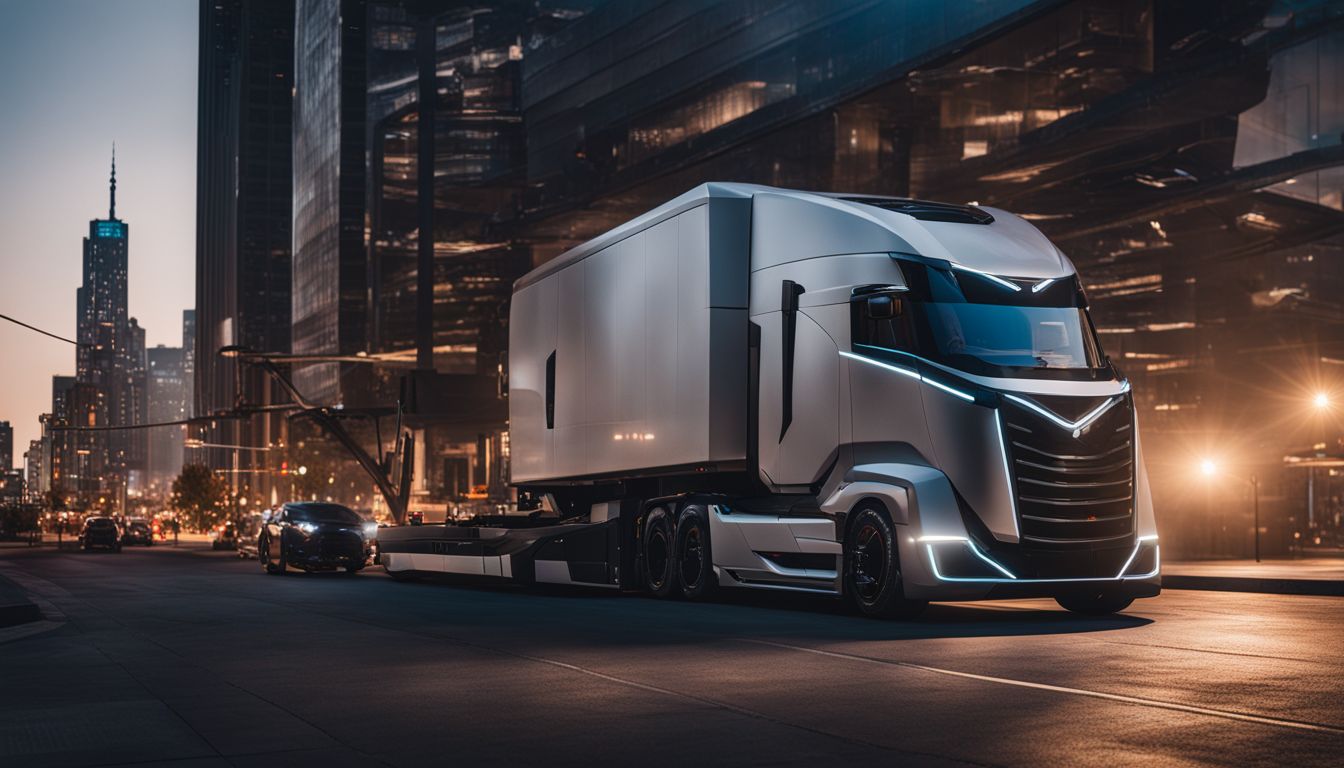
The Nikola Two is a semi-tractor truck idea that’s not yet real. It has four motors that give it 2000HP power. This truck uses nine inverters to work. The best part? It runs on a hydrogen fuel cell electric system. No need for plain old petrol or diesel! But remember, it’s still an idea and not in use yet.
Nikola Tre

Nikola Tre is more than just a truck. It’s the future of travel. This vehicle will be Nikola’s first to have PlusDrive, a tool for spotting problems on the road! The plan is to launch these smart trucks in 2024.
Big trucking companies like PGT and Christenson are already excited! They want to test these cool new trucks in their fleet. But that’s not all! The Tre BEV (battery-electric vehicle) helps drivers stay connected with super smart tech features.
Even better? If you’re buying in California, you can get up to $120,000 back per truck from the Air Resources Board. Can’t wait to see it on the roads soon!
Nikola NZT (Nikola Zero)
-102622806.jpg "The Nikola NZT driving through rugged off-road terrain in a bustling atmosphere.") Nikola NZT, also known as Nikola Zero, is an exciting concept vehicle developed by the brand. As part of their commitment to sustainable transportation solutions, the company focuses on developing zero-emissions trucks.
Nikola NZT, also known as Nikola Zero, is an exciting concept vehicle developed by the brand. As part of their commitment to sustainable transportation solutions, the company focuses on developing zero-emissions trucks.
The NZT showcases their dedication to eco-friendly and electric mobility options. It’s a cutting-edge concept car that aligns with the current trend towards clean and green transportation.
The Nikola NZT represents a step forward in the development of alternative fuel vehicles and demonstrates Nikola’s position as a disruptor in the industry.
Nikola Reckless

The Nikola Reckless is an exciting military-grade electric vehicle that’s part of the lineup from Nikola Motor Company. As a prototype, it’s not yet a fully developed and production-ready vehicle.
The Reckless was showcased alongside four other future vehicles during a big reveal event by the brand. It’s designed to be a tactical off-highway vehicle that’s fully electric and zero-emission.
This means it doesn’t produce any harmful emissions while still providing the power and capability needed for military operations. It’s an impressive concept that showcases how electric technology can be applied to different industries, including the military sector.
That wraps up our look at the Nikola Reckless, one of the exciting concept vehicles from the company. With its fully electric design and tactical capabilities, it shows how innovative technology like this can make a difference in various sectors, including the military industry.
Nikola WAV

The Nikola WAV is an exciting concept vehicle that takes electric transportation to the water. It’s an electric watercraft with a futuristic 4K display, giving you a high-tech experience while enjoying your time on the waves.
Although there is no specific release date for the Nikola WAV yet, it is expected to be available in the next few years. Unfortunately, details like pricing and specifications have not been announced at this time.
The Nikola WAV was showcased at the impressive Nikola World event, where visitors got a glimpse of its potential in the watercraft industry. We can’t wait for more information about its availability and when we can get our hands on this innovative electric boat!
Nikola Badger

The Nikola Badger is an electric pickup truck developed by the company. It’s a concept vehicle that combines battery-electric and hydrogen fuel cell technology to provide sustainable transportation.
With a driving range of up to 600 miles and a high torque output of 980 lb-ft, the Badger was designed to compete in the pickup truck market, particularly with Tesla’s Cybertruck. General Motors had partnered with the company to manufacture this eco-friendly alternative fuel vehicle.
Recent News and Updates

In conclusion, despite the challenges, Nikola Motor Company is forging its way among the top list of the leading manufacturers of heavy-duty commercial electric vehicles and energy solutions. With their focus on zero-emission trucking, they have introduced innovative vehicle concepts and received significant funding. The brand is pushing the boundaries of sustainable transportation and paving the way towards a cleaner future.